
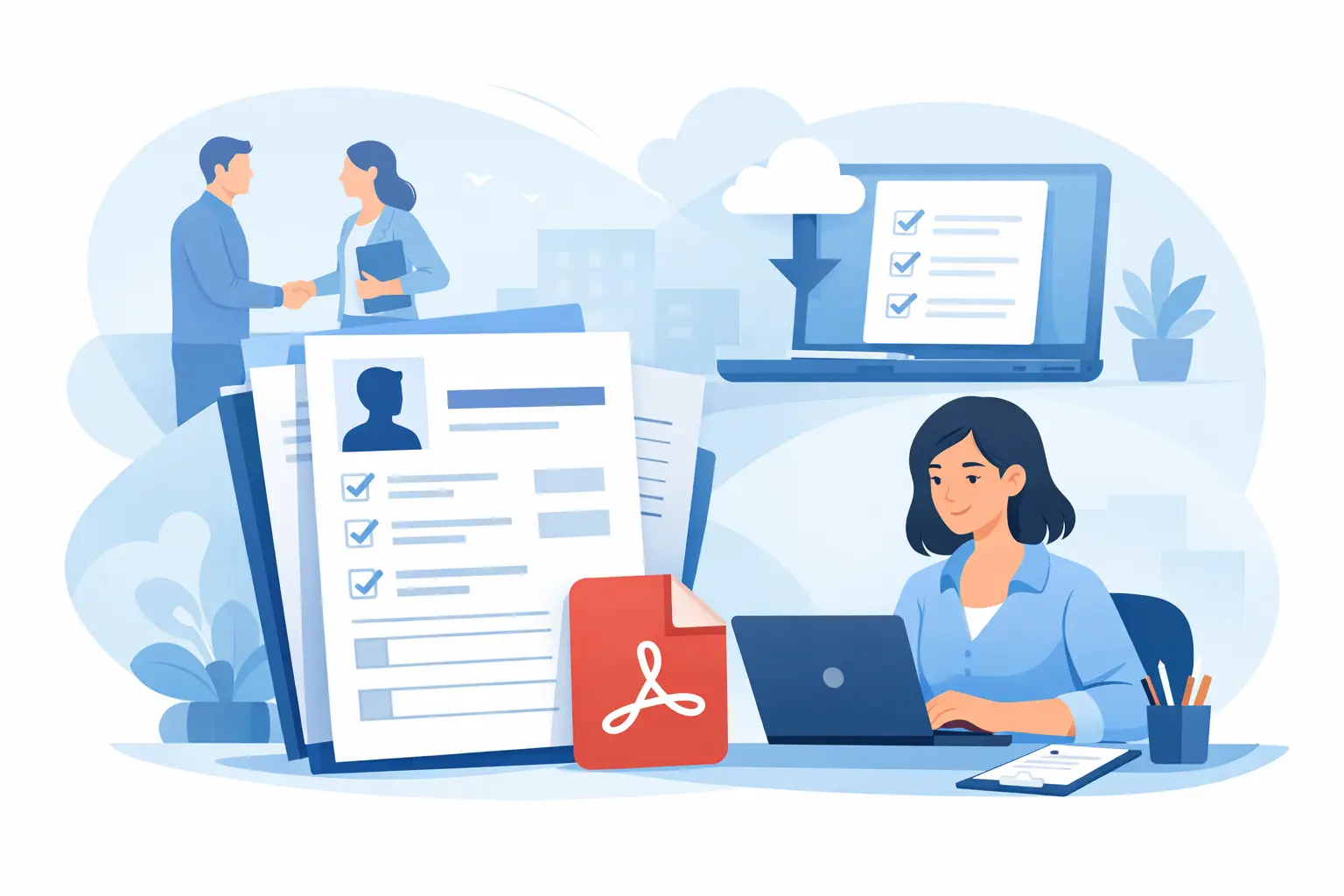
A new hire is ready to start, but the paperwork is scattered across email threads, printouts, and mismatched file formats. That is usually where delays begin. A clean employee onboarding forms PDF workflow fixes that fast by giving HR teams, managers, and small business owners a consistent way to collect, complete, and store the right documents from day one.
For most U.S. employers, onboarding paperwork is not just administrative busywork. It affects payroll setup, tax withholding, identity verification, policy acknowledgment, and recordkeeping. When forms are missing, outdated, or hard to fill out on mobile, the first day becomes a scramble. The goal is simple: get the right forms in front of the right person, in a format they can complete quickly and accurately.
What employee onboarding forms PDF files usually include
The exact packet depends on your business, industry, and state, but most onboarding sets follow a familiar pattern. Federal forms usually come first. That often includes Form I-9 for employment eligibility verification and Form W-4 for federal income tax withholding. Some employers also collect a direct deposit authorization form, emergency contact form, and signed acknowledgments for company policies.
Beyond that, the packet can expand based on role and location. State tax withholding forms may be required. Employers in regulated industries might need confidentiality agreements, background check disclosures, equipment sign-out forms, or role-specific compliance documents. A contractor packet looks different from an employee packet, which is why a one-size-fits-all folder can create confusion.
PDF remains the practical format for this process because it is stable, portable, and familiar. A well-built PDF keeps the layout intact on phones, laptops, and office desktops. That matters when a new hire is completing forms remotely and your team needs the returned documents to look exactly the way they should.
Why PDF still works for onboarding
An employee onboarding forms PDF package is not flashy, but it solves real operational problems. It standardizes the experience. Everyone gets the same document version, the same field structure, and the same instructions. That reduces the chance of someone filling in the wrong line, skipping a signature, or returning a file that opens differently on another device.
There is also a compliance advantage. HR teams need documents that are readable, printable if needed, and easy to archive. PDF supports that better than editable word processor files, which can shift formatting or break when opened in different software. If your process includes signatures, annotations, or field-based completion, PDF gives you a controlled format without requiring employees to install desktop software.
That said, PDF is only as useful as the workflow around it. If your forms are image scans with no fillable fields, the process slows down. If employees have to print and scan everything back, completion rates drop. The better approach is a fillable, browser-friendly setup that removes extra steps.
The forms that matter most on day one
Some onboarding forms are essential because they connect directly to legal or payroll obligations. Form I-9 is one of them, and timing matters. Employees must complete Section 1 by their first day of employment, and employers must review documentation and complete Section 2 within the required window. A missing or incomplete I-9 is not a small paperwork issue.
The W-4 is just as important because it affects withholding accuracy. If a new hire submits incorrect details or leaves the form unfinished, payroll problems can follow quickly. Direct deposit forms are not federally mandated, but they are common and help avoid payment delays. Policy acknowledgments are more internal, yet they matter when you need a record that the employee received key information.
This is where a clear onboarding packet helps. Instead of sending five separate attachments with separate instructions, HR can provide one organized set of PDFs or one centralized workflow. That saves time for both sides and reduces back-and-forth before the employee is even fully set up.
How to build a better employee onboarding forms PDF process
Start by separating mandatory forms from company-specific forms. Federal and state documents should be current, official versions. Internal forms should be reviewed regularly so you are not handing out policies that changed six months ago. Version control sounds minor until someone signs the wrong handbook acknowledgment.
Next, make the forms easy to complete digitally. Fillable fields, checkboxes, date fields, and signature areas cut friction immediately. If employees can open a document in a browser, complete it on any device, and return it without converting file types or printing pages, your completion rate improves.
It also helps to organize forms by sequence rather than by department. The employee does not care whether payroll, HR, or legal owns a document. They care about what needs to be done first, what is optional, and what requires supporting documents. A packet that follows the employee journey is easier to complete than one built around your internal org chart.
Keep instructions short and visible
Most form errors come from confusion, not resistance. If a field regularly causes mistakes, add a short note near it or in the opening instructions. Tell employees what identification to bring for I-9 verification. Clarify whether a mailing address can differ from a home address. Explain who should complete state tax forms and when.
Long instruction documents are rarely read. Short prompts inside or alongside the PDF work better.
Use secure storage and transfer
Onboarding files contain sensitive data, including Social Security numbers, banking details, addresses, and identity documents. Sending that information through loosely managed attachments creates risk. A secure document workflow matters as much as the form itself.
That means using encrypted transfer, limiting unnecessary downloads, and storing files in a controlled environment. If your team handles onboarding at any volume, file retention and deletion practices should be defined upfront. Convenience matters, but not at the expense of data protection.
Common mistakes with employee onboarding forms PDF workflows
The first mistake is relying on outdated forms. Federal and state agencies update forms periodically, and using an old version can create compliance issues or force rework later. The second is using static PDFs that are hard to fill out on mobile devices. If a new hire has to pinch, zoom, print, and scan, you are adding friction where none is needed.
Another common problem is collecting too much paperwork too early. Some employers overload first-day packets with every possible document, even when several forms are only relevant after benefits enrollment or equipment assignment. That can make onboarding feel heavier than it needs to be. It is often better to separate immediate requirements from follow-up documents.
There is also the issue of fragmented tools. One tool for editing, another for signatures, another for converting files, and another for finding official forms can slow your team down. If you process forms regularly, consolidation usually saves more time than any one feature does.
Choosing the right tool for onboarding PDFs
A good onboarding workflow needs more than a document viewer. You need to find official forms quickly, fill them out without format issues, make basic edits when internal paperwork changes, and keep everything secure. Browser-based tools are especially useful for distributed teams because they remove installation and device barriers.
If your business handles recurring onboarding paperwork, look for practical essentials: fillable forms, PDF editing, conversion from Word or image files, file organization, and security controls. Speed matters too. Instant processing is not just a convenience feature when HR is trying to get someone cleared for payroll before the cutoff.
This is one reason all-in-one platforms stand out. Instead of bouncing between file converters, online editors, and form libraries, teams can manage everyday PDF tasks and official employment forms in one place. PDF Awesome fits that use case well because it combines browser-based PDF tools with a searchable library of common U.S. forms, including W-4 and I-9 documents, while supporting secure processing with 256-bit SSL and auto-deleted files.
When paper still makes sense
Digital is usually faster, but not every situation is identical. In-person hiring events, field roles, and small operations with limited device access may still use paper for part of the process. Some employees are also more comfortable reviewing policies on paper before signing digitally later.
The answer is not to avoid PDFs. It is to keep the workflow flexible. If a paper form is collected onsite, it should still be scanned cleanly, converted into a readable PDF, and stored with the rest of the employee file. Hybrid workflows are common. The key is making sure the final record is complete, consistent, and easy to retrieve.
A strong onboarding process does not feel complicated to the new hire. It feels clear, fast, and handled. When your employee onboarding forms PDF workflow is organized, secure, and easy to complete, the paperwork stops stealing attention from what actually matters - getting people ready to work.
